
Watching a sharp founder fumble a ChatGPT prompt is a weird kind of painful. Same person builds a pitch deck that makes investors tear up, then types one vague line into a chat box and trusts whatever comes back. I keep seeing it, and it drives me a little crazy.
So I was glad to find a post from an AI professional who exited their last company and watched this exact gap slow their team down while scaling. The original poster laid out the actual rules nobody bothers to teach. Two clean lists: 10 habits to drop, 10 to build. I read it twice and thought, yeah, this is the stuff people quietly get wrong every single day.
The core point stuck with me. Most founders treat ChatGPT like a search bar when it is really a collaborator. Half the team assumes it already knows the company numbers. The other half never explains what they actually want. Both walk away with mediocre output and no clue why.
100+ ChatGPT Prompts to Revolutionize Your Day
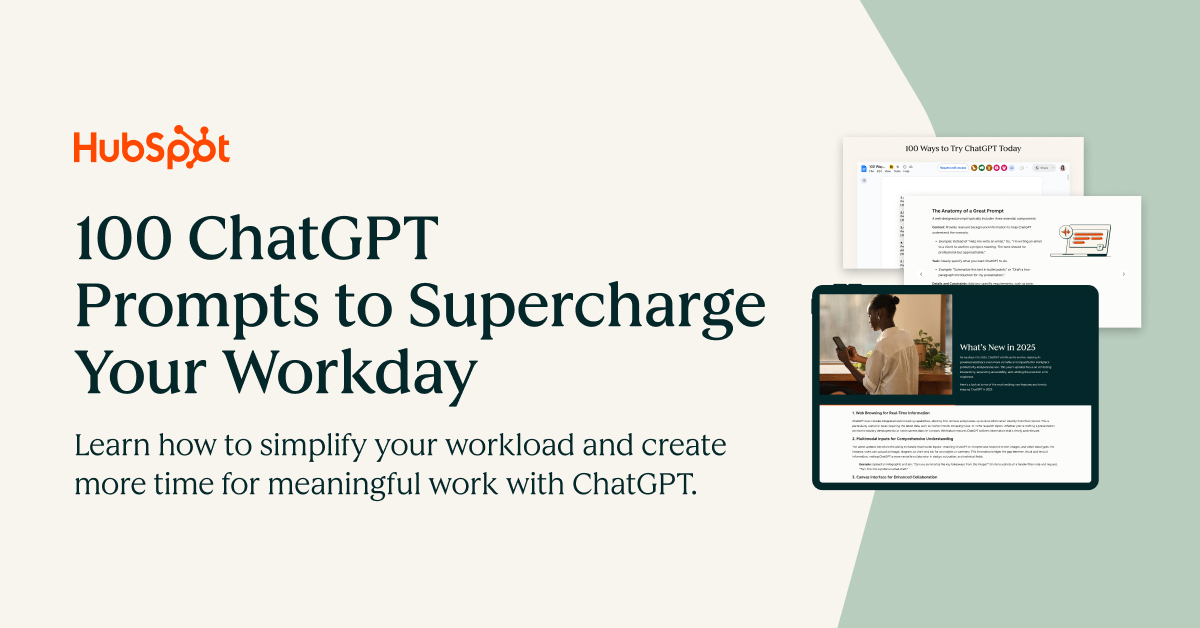
Supercharge your productivity with HubSpot's comprehensive guide. This free resource is your fast track to AI mastery:
• Industry-Specific Use Cases: 15+ real-world applications across various sectors
• Productivity Guide: 21 best practices to 10x your efficiency with AI
• Prompt Powerhouse: 100+ ready-to-use prompts for immediate implementation
• Challenge Buster: Overcome common AI hurdles with expert strategies
Plus, in-depth sections on email composition, content creation, customer support, and data analysis.
Find Your Guide Here
*Ad
The ten habits to drop
None of these come from a lack of skill. They come from nobody explaining the rules. Here they are, reworded with a bit of the why so it actually lands.
Vague one-liners on hard problems. Complex tasks need context. A single line gives the model nothing to work with.
Assuming it knows current events. Today's news, prices, and laws are not baked in. It will guess and sound confident doing it.
Dropping a file with no instructions. Uploading a document without saying what you want back is a coin flip.
Leaning on memory instead of real context. Chat history is not a substitute for spelling out what matters right now.
Letting agents act unchecked. Agentic tools take real actions. Check the scope before you turn them loose.
Pasting secrets into a chat. Passwords, keys, and confidential data do not belong in a prompt box.
Trusting high-stakes answers blindly. If the answer feeds a real decision, you verify it yourself.
Using research modes to skip thinking.
Study ModeandDeep Researchhelp you think, not think for you.Assuming every feature is on your plan. Tools and features vary by tier. Do not assume access.
Ignoring consent and copyright. Multimodal tools still have rules around permission and ownership.
The founders who fix these move noticeably faster, and the poster says it is not about being smarter. They just stopped guessing.

*Ad
What if a single test could unlock everything you need to know about your health? With TruDiagnostic, it can. From identifying your biological age to tracking key markers like inflammation, vitamins, and metabolic health, their reports are fully customized to you. You’ll receive actionable steps based on your results, giving you the clarity and confidence to make impactful changes. One finger prick of blood, one life-changing report. Our readers can save 20% today with code NEWSLETTERS20
The ten habits to build instead
This is my favorite part, because it is not just "do not do that." Every mistake gets a replacement move.
Write structured prompts. The goal, the context, the constraints, and the format you want back. Every time.
Use
SearchorDeep Researchfor anything time-sensitive. Live tools handle current info far better than memory does.Explain what you want from a file. Tell it exactly what to pull, fix, or summarize from the upload.
Use
ProjectsandMemoryfor real context. Preserve the details that genuinely matter across sessions.Use
Tasksand connectors for recurring work. Scope the repeatable jobs so they run clean every time.Use
Data Analysisfor numbers. No more crunching by hand when the tool does it accurately.Use image tools to create. Make something real, do not shortcut around the actual thinking.
Use
Study Modeto learn. Understand the answer instead of just copying it.Use Voice and Record with consent. Every single time, no exceptions.
Review output before it touches a decision. A quick human check catches the expensive mistakes.
None of it is fancy. Not a secret prompt, not a hidden setting. It is discipline.
Reading a list once and building the reflex are two different jobs. There is a chatgpt track inside 3 Minute AI that walks these same moves in three-minute reps, each one paired with a built-in lab to run it in, which is the part a list on a screen cannot give you. Daily lessons and two full courses cost nothing, so it is a cheap way to find out whether the habit holds.
In partnership with

Home mixers weren’t built for bread. We fixed that.

Ever tried to make dough in your regular mixer?
The results aren’t pretty: Clumpy texture. Stodgy bread. Overheated motors.
So, we took the same dough-making technology that professional bakers have used for decades and packed it into a countertop machine.
Introducing Ooni Halo Core.
Its secret? Spiral mixing.
In a regular mixer, a single hook chases your dough around the bowl — like someone trying to knead with one hand tied behind their back.
But in a spiral mixer, three synchronised attachments fold and stretch dough as one, replicating the precise and powerful dual-kneading action of a skilled baker’s hands.
The result: Stronger dough, softer loaves and a higher rise.
Why this one stuck with me
I like how the poster framed it at the end. We have all built on tools nobody had mastered yet. This one is no different. A tool only compounds once you know how to hold it, and most people are still holding it wrong.
Goal, context, constraints, format. Verify before you trust. Keep your secrets out of the box. Simple rules that quietly separate the fast founders from everyone else.
So pick one item off the drop list. Just one. Fix it in your next session and watch the output change. That single swap, from a lazy one-liner to a structured prompt, usually does more than any clever trick.
The full breakdown is worth reading in the original poster's own words, so grab the complete post for every detail.
Hire Ava, the AI BDR built for enterprise

Ava is the first AI BDR to run outbound end to end, finding leads or ingesting your CRM accounts, sending personalized emails on your reps' behalf, and booking meetings, autonomously or on copilot. She runs outbound for DoorDash and Grammarly. She's SOC 2 Type II audited, SSO and GDPR ready.
*Ad
Poll: Be honest. Which one on the drop list are you still guilty of?
Hit reply and tell us why.
